KLIQ Blog
Insights on image recognition AI, visual data, and efficient operations across industries.

A Brief History of Computer Vision: From Edge Detection to Real-Time Intelligence
Computer vision has evolved from simple edge detection algorithms in the 1960s to real-time AI systems that can interpret complex visual scenes. Here is the story of how machines learned to see.

The Future of Computer Vision: Five Trends Reshaping How Machines See
Computer vision is moving from cloud-only models to edge devices, from single-task systems to multimodal intelligence. Here are five trends that will define the next era of visual AI.
Build vs Buy: The Real Cost of Running Your Own Computer Vision Pipeline
A balanced breakdown of the real costs of building your own CV pipeline vs using an API. Includes visible costs, hidden costs, and when each approach makes sense.

Computer Vision for Developers Who Don't Do ML
You don't need a machine learning background to add computer vision to your app. Here is how to think about CV as a developer, from API responses to architecture patterns.

5 Computer Vision Projects You Can Build This Weekend
Five practical computer vision projects you can build in a weekend with no ML experience. Includes full code examples and ideas for turning each into a real product.
Why Computer Vision Is Still a Hard Problem (And Why That's an Opportunity)
Computer vision has made enormous progress, but the problem is far from solved. Here is why that difficulty creates an opportunity for developers who use the right tools.
Your First Computer Vision API Call in 5 Minutes
A practical, step-by-step tutorial to go from zero to a working computer vision integration with the KLIQ AI API. Includes full code examples in Python, JavaScript, and cURL.
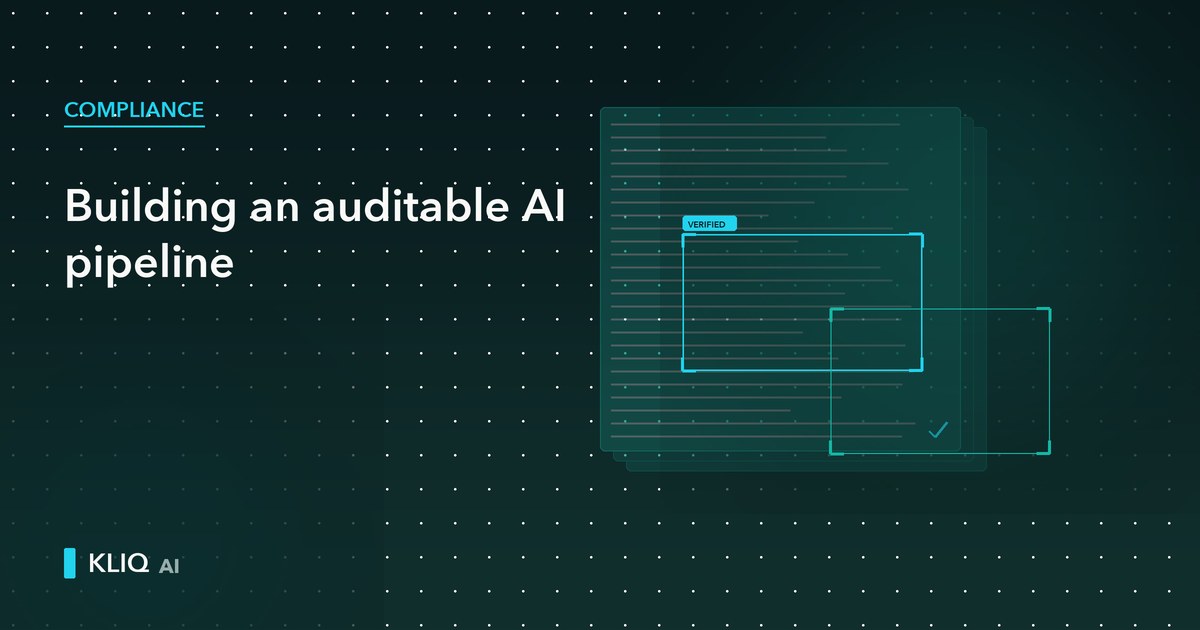
Building an Auditable AI Pipeline for Asset Decisions
When an AI-assisted decision about a physical asset gets challenged, "can you show your work" is the first question. Here's what an auditable pipeline actually requires, and why most computer vision deployments can't answer it today.
The Rise of On-Device AI: Why Edge Processing Matters for Visual Data
Running AI models directly on smartphones isn't just faster — it's fundamentally changing how businesses capture and process visual data in the field.

Photo In, Verified Data Out: How the KLIQ AI Plugin Works
Most asset verification workflows already run on photos. The problem is what happens after the photo is taken. Here's how the KLIQ AI plugin turns existing photo workflows into structured, auditable data.
Construction Site Documentation: Why Photos Alone Are Not Enough
Construction teams take thousands of site photos. Very few of them turn into usable data. Here is how to close the gap between documentation and verification.
Why Maritime Hull Inspection Is a Data Problem as Much as a Safety Problem
A single hull inspection generates hundreds of photos, but the review that follows is still manual, taking days per vessel and depending on one surveyor's judgment. Here's what verified extraction changes for fleet safety.

Photo Inspection Software in 2026: Comparing Your Options
A practical comparison of photo inspection and visual verification software options available in 2026. Features, rollout options, and what to look for.

How Physical Asset Intelligence Transforms Insurance: From Claims Processing to Fraud Detection
Fraud accounts for around 10% of European claims costs, and property claims are especially exposed because claimants control what gets photographed. Here's how verified, timestamped photo data changes that asymmetry.
How to Build an AI-Ready Visual Data Pipeline
Deploying computer vision in production requires more than a good model. Here's a step-by-step guide to building a visual data pipeline that actually works at enterprise scale.
How Facility Managers Are Losing Control of Asset Condition Data
A facility manager overseeing 15,000 assets across 50 buildings typically works from a survey cycle that revisits each asset once every 2-3 years. Reactive maintenance costs 3-9x more than planned. Here's what closes the gap.
How to Scale Asset Verification Across Hundreds of Locations Without Scaling Headcount
Traditional inspection scales linearly: double the locations, roughly double the headcount. Here's how photo-based verification breaks that link between coverage and cost.
Why Geotagged Visual Data Is the New Ground Truth
In an era of synthetic content and data manipulation, geotagged smartphone photos offer something rare: verifiable, timestamped proof of physical reality.
The Field Data Reliability Gap: Why the Data Feeding Your Decisions Is Worse Than You Think
Most maintenance and risk decisions run on condition data that's already more than six months old by the time anyone acts on it. Here's why that gap persists, and what closes it.
Why Static Computer Vision Models Fail in Field Verification (And What to Use Instead)
Static models lose 10-20 percentage points of accuracy the moment they meet a property, package, or defect type outside their training set. Self-training models close that gap without a manual retraining project.
Photo Verification vs Manual Checklists: What the Data Shows
We compared photo-based verification against traditional manual checklists across accuracy, speed, and cost. The results were not close.
AI-Powered Asset Inspection: Replacing Clipboards with Computer Vision
Manual inspections are slow, inconsistent, and hard to audit. Here's how computer vision is creating a faster, more reliable alternative for insurance, construction, and infrastructure management.

What the EU AI Act Means for Computer Vision in Regulated Industries
By August 2026, providers of high-risk AI systems, including computer vision used in underwriting and safety inspection, must show risk management, data governance, and human oversight. Here's what actually changes.
The Hidden Cost of Manual Field Inspections in 2026
Manual field inspections cost more than you think. Beyond labour, there are data quality, compliance, and opportunity costs that most companies overlook.

Why Construction Handover Defects Keep Slipping Through Documentation
A third of snagging items on a typical handover end up disputed months later, not because the defect was invented, but because the evidence tying it to a date and location never existed.
5 Ways Computer Vision Is Reshaping Retail Execution
From shelf compliance to competitive intelligence, computer vision is giving CPG brands unprecedented visibility into what's happening at the point of sale.
The Real Cost of Shelf Compliance Failures in FMCG
15-25% of shelf space is out of planogram on any given week for a typical national FMCG brand, and periodic merchandiser visits catch it weeks too late. Here's what real-time shelf verification changes.

What Is Image Recognition AI? A Practical Guide for Business Leaders
Image recognition AI is transforming how businesses capture and use visual data. Here's what decision-makers need to know about deploying computer vision in real-world operations.
How Much Is Manual Asset Inspection Really Costing Your Insurance Business?
A 40,000-policy insurer spends close to a million euros a year on manual surveys, and the data is stale before it's even filed. Here's the real cost of the inspection gap, and what closes it.
Newsletter
Get new field notes, product updates and inspection benchmarks. One email, no noise.